B2B eCommerce World ANZ 2026: What We Saw, Heard and Learned
Aligent spent two days at B2B eCommerce World ANZ in Melbourne, and it remains one of the highlights of our year.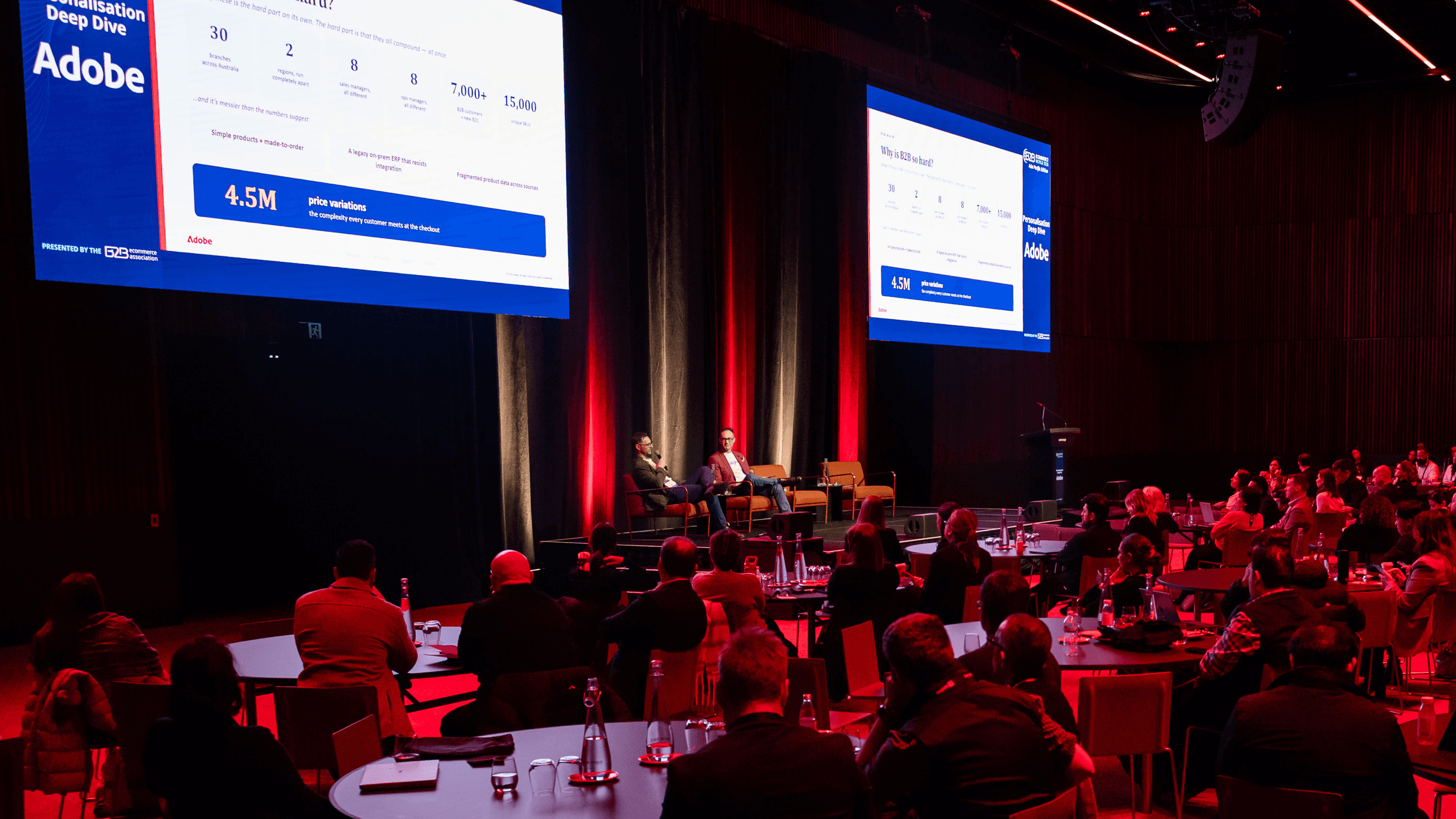
Aligent spent two days at B2B eCommerce World ANZ in Melbourne, and it remains one of the highlights of our year.
Unlike the larger retail-focused events, B2B eCommerce World is grounded in the operational realities of selling to other businesses: account hierarchies, contract pricing, ERP integration, and the unglamorous but critical work of making it easier for a customer to place a repeat order.
We went to catch up with the ecosystem and hear what B2B businesses are working through, and came away with a fairly simple conclusion: the businesses winning at B2B eCommerce have stopped treating it as a website project and started treating it as an operating model.
In short, the strongest theme across every session and conversation was integration — connecting front-office commerce with back-office data. Cost to serve is now the metric B2B leaders build their business case around. WISMO (order-status) inquiries remain a major cost centre, AI-powered search is only as good as the product data behind it, and dynamic B2B pricing is a real opportunity if the underlying systems can support it.
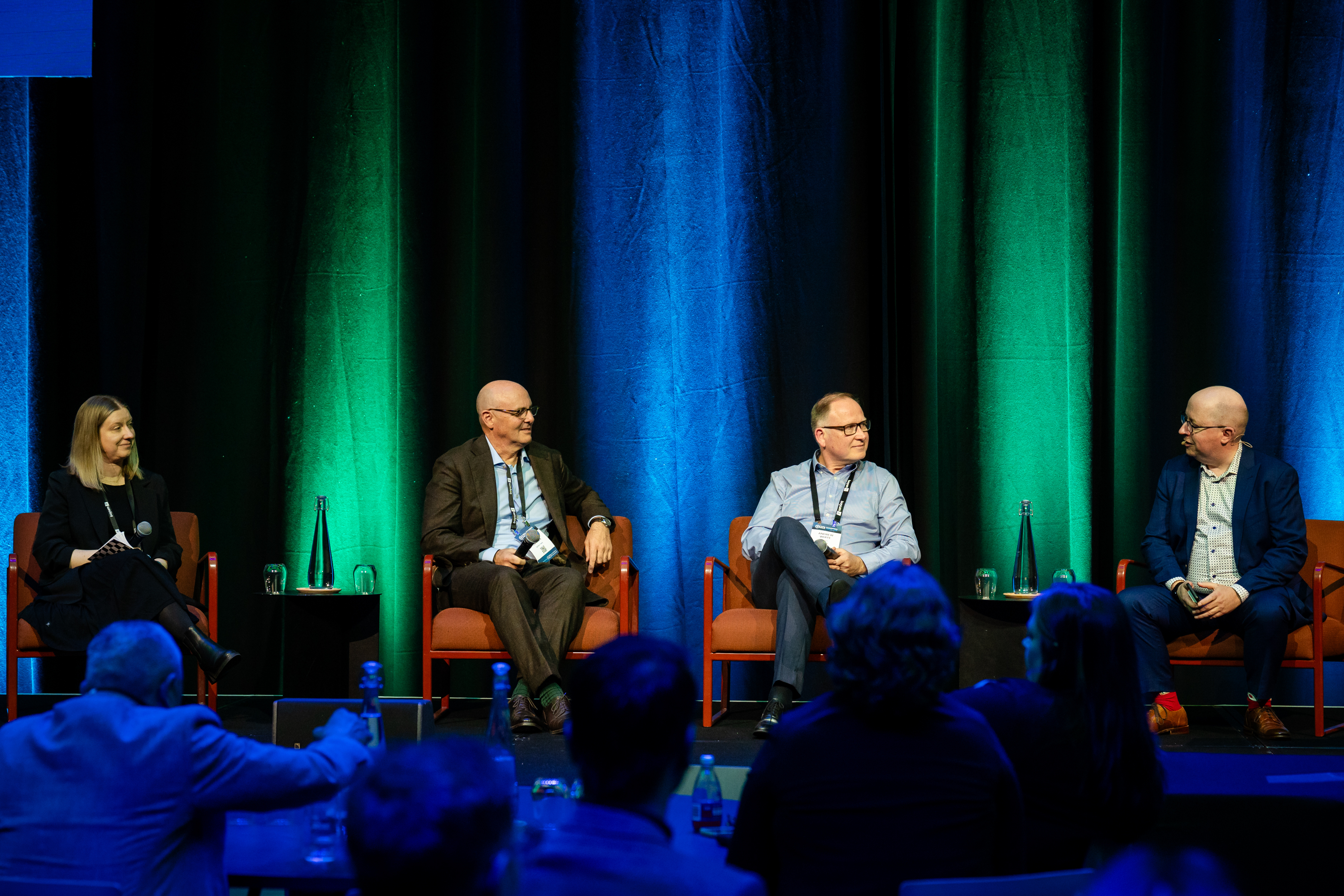
On Stage with Polyaire
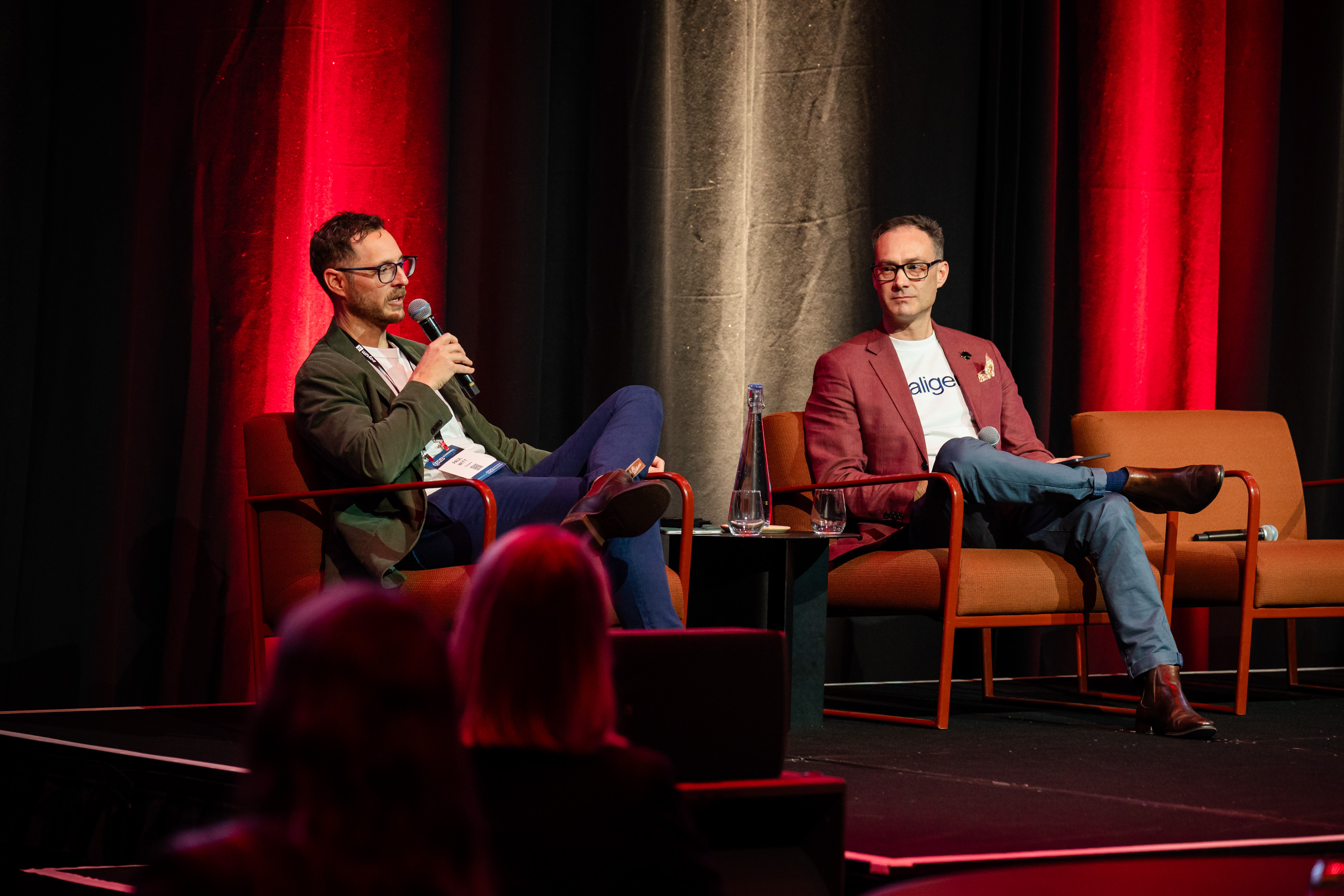
One of the highlights for us was presenting on stage alongside Polyaire. Presenting mid-project carries more risk than talking about a finished case study, since there's less room to smooth over the rough edges. But that's also what made the session useful.
The Polyaire engagement spans a new eCommerce build across multiple brands, a Portalink implementation designed to significantly reduce the manual rekeying involved in processing emailed purchase orders, and a PIM project using Akeneo to make product information consistent across every channel Polyaire sells through.
Paul Witt, Head of Digital at Polyaire, spoke candidly about the complexity sitting behind all three: a product range that spans simple, off-the-shelf items and fully made-to-order configurations, a legacy on-premise system that resists integration, product data fragmented across multiple sources, and 4.5 million price variations to manage.
Polyaire's business philosophy is built on the flywheel concept from Jim Collins' Good to Great: the idea that sustainable success doesn't come from a single big push or a single event, but from turning a heavy wheel in a consistent direction, again and again, until the accumulated momentum becomes unstoppable. For Polyaire, every decision gets tested against two pillars that keep that wheel turning in the same direction: business efficiency and customer experience.
B2B eCommerce Isn't Retail eCommerce with a Login
If you've spent time at retail eCommerce events, B2B eCommerce World has a noticeably different feel. It's not that B2B businesses don't care about conversion or customer experience. They do. It's that the conversation starts one layer deeper.
Retail talks about cart abandonment, conversion rate, AOV, and DTC. B2B has another vocabulary:
The difference isn't absolute, but the centre of gravity is different. A B2B transaction might look like: find a product, check availability, confirm customer-specific pricing, create or convert a quote, raise a PO, obtain approval, then invoice against the account. The website is only one part of that process, which is why B2B eCommerce projects are often as much about business transformation as about building a better storefront.
EDI, Punchout, and the Reality of Omnichannel B2B
Two terms that remain particularly important in B2B are EDI and punchout. EDI, or electronic data interchange, moves structured business documents like purchase orders and invoices between systems without manual rekeying. Not fun, not sexy, but important. Punchout lets a buyer access a supplier's catalogue from within their own procurement system and return the basket for approval and purchase.
Neither is new, and that's the point. They're not being replaced by a shiny new storefront; they're part of a broader ecosystem that also includes direct online commerce, customer portals, marketplaces, e-procurement, dealer portals, and configure-price-quote. B2B buyers want to interact with suppliers through whichever channel works best for them. The challenge isn't choosing one channel. It's connecting them.
Congratulations to Our Clients and Partners
A genuine highlight of the event was seeing familiar names recognised at the B2B eCommerce Industry Awards. Our customers: Bowens, Sutton Tools, The Fruit Box Group, Viva Retail, and Vulcan were all part of the 2026 program, with Bowens and Sutton Tools taking out wins and the others named as finalists. Sutton Tools was named Best Mid-Market B2B eCommerce Business of the Year, alongside a reported 35% year-on-year increase in eCommerce revenue: a fantastic result given the scale of the transformation behind the scenes.

It's genuinely rewarding to see clients and partners recognised at this level, and a good reminder of how broad B2B commerce is: building supplies, tools, food distribution, retail supply, and industrial products. There isn't a single B2B customer or a single B2B eCommerce model. Congratulations to all five.
The Trends We're Watching
A few themes came up repeatedly, in sessions, in conversations and generally with customers since.
1. The Business Case Is More Important Than Ever
No B2B eCommerce investment gets funded on vibes. Every conversation comes back to ROI, margin, adoption, and cost to serve: how much revenue will move digital, how much manual work will disappear, how quickly the investment pays for itself. That's a healthy sign of a maturing market, and one metric increasingly sits at the centre of it: cost to serve.
2. Cost to Serve Deserves Its Own Line
Cost to serve isn't just picking, packing, and delivering an order. It's everything between a customer deciding to buy and that order being processed correctly: every phone call, every manual quote, every rekeyed purchase order, every interaction that could have been self-service. Automation, integration, search, and self-service matter in B2B because they reduce that cost and friction, which strengthens the business case for every digital investment.
3. WISMO Doesn't Disappear in B2B, It Just Wears a Different Uniform
"Where is my order?" is one of the most common requests customer service teams field, and it's arguably a bigger problem in B2B than retail, since an order is rarely one parcel. It's often a multi-line PO that ships in stages, partly from stock and partly on backorder, and every stage is a fresh chance for a customer to call.
WISMO inquiries can make up a significant share of post-purchase support contact, and each one costs real money in agent time. It costs more than money too: skilled staff spend their day repeating tracking numbers instead of doing account management, and a customer who has to chase an order loses a little confidence each time. Proactive, self-service tracking can significantly reduce WISMO by telling the customer what's happening before they have to ask.
Proactive milestone notifications reduce the anxiety that drives a call, and because B2B orders so often ship in parts, tracking a single PO across multiple shipments and carriers in one place matters even more than for a single retail parcel. None of it works without integration: a tracking page can only tell the truth if it's connected to real-time ERP, warehouse, and carrier data.
4. Adoption Is as Important as Conversion
Retail asks: did the customer convert? B2B also needs to ask: did the customer adopt the channel? Which customers are still calling or emailing purchase orders, and why? A beautifully designed site doesn't deliver much value if customers keep using the old manual processes. For B2B, adoption is often the measure that turns a project into a genuine transformation.
5. Search Is Becoming a Much More Interesting Problem
B2B search has always been different. Retail shoppers browse; B2B buyers hunt. They search using SKUs, part numbers, model codes, industry abbreviations, technical specifications, and the shorthand they use every day,not the tidy product names a marketing team might choose. A buyer might type a manufacturer's part number, a competitor's equivalent code, or a phrase like "20mm brass fitting, threaded, high pressure" and expect the right result regardless of how the product is actually titled in the catalogue.
AI-powered search is starting to understand more of that intent. Instead of needing an exact match, natural-language and conversational search can interpret what a buyer is actually trying to find, understand relationships between products and specifications, and help narrow a large catalogue down without the buyer needing to know precisely what something is called.
But AI is only as good as the product data behind it. Titles, descriptions, specifications, technical documents, compatibility information, and structured attributes all matter more once machines, not just people, are doing the matching. That's where PIM becomes interesting. Good product information isn't a back-office tidiness exercise; it's infrastructure that makes products discoverable by customers, search engines, and increasingly AI systems. Get the data wrong or thin and the smartest search engine in the world still returns nothing useful.
6. Integration Is What Makes Everything Else Work
This was probably the strongest theme we took away, showing up consistently across almost every conversation. Connecting the front office with the back office can't be an afterthought. You can't give customers real-time availability if commerce can't see inventory, or give an AI assistant reliable answers if information is fragmented across systems.
The principle is simple: a beautiful storefront on a messy back office will always struggle, while a modest storefront on clean, integrated data delivers far more value. Integration isn't just an IT concern. It's a customer experience strategy and, increasingly, a commercial strategy.
7. Dynamic and Tiered Pricing Is an Opportunity, and a Complexity Problem
B2B pricing is rarely as simple as a price next to a product. Customers may have negotiated pricing, contract terms, volume breaks, or rebates, which makes dynamic and personalized pricing genuinely useful: it can reward loyal customers and protect margin without applying the same strategy to every account.
But the complexity is real. The system needs to know who the customer is, what they're entitled to, and which pricing rule takes precedence, which brings us straight back to data and integration. The front end can only personalise the experience if the systems behind it know what the customer is actually entitled to.
Where This Leaves Us
B2B eCommerce World is always a useful reset: a chance to see how the platforms and partners we work with every day are evolving, and to hear directly from manufacturers and distributors about what's actually working versus what's still just a slide in a vendor deck.
The consistent message this year was that the fundamentals still matter more than the latest feature: clean data, real integration, customer adoption, a defensible business case, and a relentless focus on reducing cost to serve. Get those right, and newer capabilities (AI-powered search, conversational commerce, automation, and eventually agentic commerce) have something solid to build on. Skip them, and no amount of new technology will fix a broken process.
That's probably what makes B2B eCommerce so interesting. The challenge isn't simply building a better online store. It's making the whole business easier to do business with.